

Sacramento Ring Shopping 101
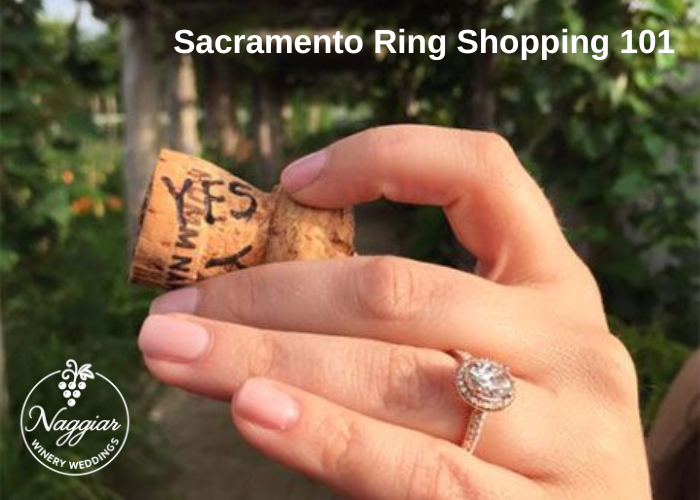
You don’t need a gemology degree—you need a plan. Here’s the clean, tactical guide to buying a ring you (both) will love.
1) Set a Real Budget (Before the sparkle)
Ignore “3 months’ salary.” Pick a number that doesn’t punch your savings in the throat.
Prioritize what shows: cut and setting drive look more than raw carat.
Smart split: ~70–85% stone • 15–30% setting/band.
2) The 4Cs (and what actually matters)
Cut (most important): Impacts brilliance. Aim for Excellent/Ideal.
Color: Near-colorless looks white in real life. G–I sweet spot (D–F is tax for bragging rights).
Clarity: Eye-clean is enough. VS2–SI1 usually fine; avoid obvious inclusions under the table.
Carat: Size isn’t linear with price; 0.9 ct can look like 1.0 for less, same for 1.8 vs 2.0.
3) Shape = Personality
Round: brightest, most versatile.
Oval/Elongated cushion: face-up big; flattering, trendy.
Emerald/Asscher: hall-of-mirrors elegance; needs better clarity.
Princess/Radiant/Pear/Marquise: bold looks; check for snag potential on points.
Try on IRL—finger shape and hand size change everything.
4) Setting Decides the Vibe
Solitaire: timeless, stone-forward.
Halo/hidden halo: bigger look, good protection.
Pavé/three-stone: more sparkle, more maintenance.
Bezel: modern, low profile, very secure.
Cathedral/compass/claw prongs: style tweaks that matter in photos.
Lifestyle test: If you lift, climb, glove-up, or are hard on jewelry → low-profile bezel or 4–6 sturdy prongs.
5) Metal Matters (and skin tone doesn’t rule)
Platinum: hypoallergenic, dense, prongs hold shape; pricier, patinas.
18k gold: rich color, slightly softer than platinum.
14k gold: toughest day-to-day; great value.
White gold: needs rhodium replating every 1–2 years.
6) Natural vs Lab-Grown (facts, not myths)
Lab-grown: same chemistry/crystal as natural; ~40–70% less cost; resale is weaker.
Natural: higher resale/“heritage” vibe; costs more per carat.
Either way: get a reputable grading report (GIA/IGI).
7) Certification & Vendor Vetting
Only buy stones with GIA or IGI reports (loose or set).
Ask for ** magnified photos + ASET/Ideal-Scope** on fancy shapes to gauge light performance.
Check return policy (at least 14–30 days), warranty, and resizing terms.
8) Sizing Without Blowing the Surprise
Borrow a ring from the correct hand/finger (or closest) and measure.
Use a printable sizer; err ¼ size larger for wider bands or swollen summer fingers.
Free first resize? Get it in writing.
9) Insurance, Now Not Later
Appraisal + receipt → add to homeowners/renters or a dedicated jewelry policy.
Cover loss, theft, mysterious disappearance, and repairs.
10) Timing & Workflow (copy this)
Week 1: Budget, style board, shortlist shapes/settings.
Week 2–3: Compare vendors, select stone + setting, confirm certificate.
Week 4–6: Production/mounting (custom can be 6–8+ weeks).
Proposal date: Build in buffer for delays and resizing.
11) Real-World Tradeoffs (useful combos)
Want size on budget? Oval/Radiant • G–H color • SI1 eye-clean • Excellent cut.
Want vintage vibes? Old mine/old Euro cut • bezel or milgrain • 18k yellow.
Want low-profile/active wear? Bezel solitaire • 14k or platinum • rounded edges.
12) Maintenance (future you will thank you)
Ultrasonic/steam only if prongs are tight; otherwise mild soap + soft brush.
Annual prong check; re-tip as needed.
Rhodium plate white gold every 12–24 months.
Remove for lifting, chlorine, and garden work. (Yes, really.)
Questions to Ask the Jeweler (paste into Notes)
Is the stone GIA/IGI-certified? Show me the report.
What’s the return/exchange window and resize policy?
Are prongs platinum or 14k/18k? (Platinum prongs = stronger.)
Lead time on setting + any custom changes?
What’s covered under warranty/maintenance?
Can I see magnified images/video + light maps for this stone?
Common Mistakes (don’t be that buyer)
Paying for D/IF perfection you can’t see with the naked eye.
Choosing a skyscraper setting for a gym nurse/chef/rock climber.
Skipping the certificate and insurance.
Guessing size on a custom, non-resizable band.
Ignoring return policies and lead times.
Quick Cheat Sheet (screenshot this)
Cut first, then color/clarity to eye-clean, then carat.
G–H color • VS2–SI1 clarity • Excellent/Ideal cut = maximum sparkle per dollar.
Low-profile if active. Platinum prongs if possible.
Certified stone, written policies, insured day 1.
Bottom Line
Buy brilliance, not bragging rights. Nail cut and setting, pick an eye-clean stone in a sane color range, get the paperwork, and insure it. That’s how you get a ring that looks like a million bucks—without spending it.
