

How to Plan a Russian Wedding at a Vineyard (Traditions + Vineyard Logistics)
Quick Answers (so you can keep planning)
Yes, Russian traditions work beautifully at a vineyard—just plan sound, timing, and space for toasts, games, and dancing.
A tamada (MC) is your secret weapon for keeping the energy high and the timeline moving.
Design your reception flow around food + toasts (apps → first toast → dinner → dance/toast cycles).
Choose a venue with flexible spaces (ceremony lawn + barrel room/indoor backup + dance-friendly layout).
Why a Russian wedding + vineyard is a perfect match
Vineyards were basically made for celebratory toasts, golden-hour photos, and long-table energy—three things Russian weddings do exceptionally well. In the Sierra Foothills near Grass Valley and Sacramento, you get that wine-country romance with a little more breathing room than the coastal crush.
The key is intentional logistics: Russian weddings often mean more program, more toasts, more “one more song”—so you’ll want a venue that can handle a lively reception without feeling like everyone’s playing musical chairs.
Want to see what “vineyard elegance with party stamina” looks like? Browse the real wedding and reception photos in our vineyard wedding gallery.
Step 1: Pick your “must-keep” traditions (and make them venue-friendly)
Russian weddings vary by region, family, and vibe—so start by choosing your non-negotiables. Here are popular ones that translate well to a vineyard setting:
Vineyard-friendly traditions (easy wins)
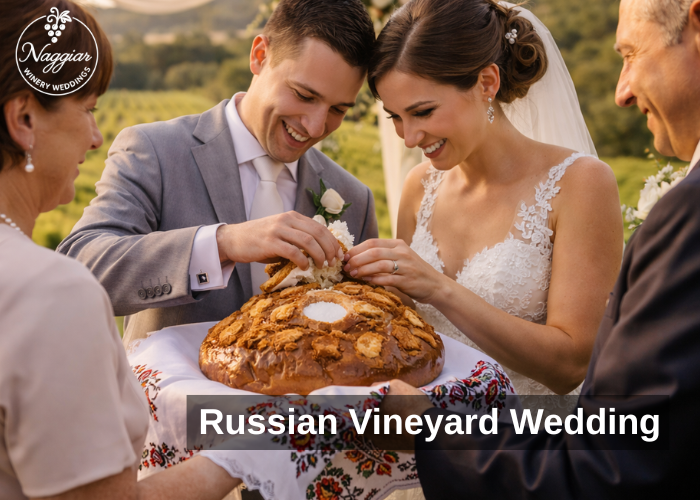
Bread + salt (каравай / karavay) welcome moment
Best spot: cocktail hour entrance or right after ceremony on the ceremony lawn.“Gorko!” kisses + toasts
Best spot: after dinner starts, when everyone’s seated and microphones behave.Tamada-led games and trivia
Best spot: between dinner courses or right before dance floor opens.Grand entrance with music + applause
Best spot: transition from cocktail hour to reception space.
Traditions that need a little planning
Bride “ransom” (выкуп невесты)
Super fun, but can expand to fill any time you give it (like glitter). Keep it 20–30 minutes and do it before guests arrive or during a separate pre-ceremony window.Multiple location photos (park + city + venue)
Gorgeous, but it can eat your daylight. If you want vineyard golden hour portraits, do a short off-site session earlier or keep everything on-site.
Pro move: Build your day around light + transitions. The vines, the ceremony lawn, and that warm Sierra Foothills sunset don’t wait for anyone—not even Auntie’s third toast.
Step 2: Build a reception timeline that respects toasts (and your feet)
A classic Russian reception can be long—in the best way. The trick is creating a structure that feels festive, not endless.
Sample vineyard reception timeline (5–6 hours)
4:00 Ceremony on the ceremony lawn
4:30 Bread + salt + photos + cocktail hour among the estate vines
5:30 Grand entrance + first toast (tamada/mic check!)
5:45 Dinner begins (salads/apps already set = instant happiness)
6:15 Toast set #1 (2–3 toasts max)
6:45 First dance + dance set #1
7:15 Toast set #2 + tamada game
7:45 Dessert + coffee (aka “second wind” station)
8:00 Dance set #2 (turn it up)
9:00 Last call + send-off
Toast rules that keep things joyful
Limit formal toasts to 8–12 total (yes, really).
Use toast “sets”: 2–3 toasts, then food/dance.
Put your tamada in charge of the mic—not the crowd. (This is how timelines survive.)
If you’re comparing options, start with wedding pricing and package details here.
Step 3: Choose a tamada who understands vineyard flow
A tamada doesn’t just emcee—they manage energy. At a vineyard, they also need to:
Keep people engaged without blocking service
Coordinate mic use and music cues
Respect venue sound guidelines (without killing the party)
Move guests smoothly between spaces
Tip: Ask your tamada if they’ve run a wine country wedding before. Vineyards have natural transition points (lawn → cocktail → reception), and a great MC uses them like chapters in a really good book.
Step 4: Plan the food like a love letter to your guests
Russian weddings = hospitality. Vineyard weddings = culinary moments. Combine them and you’ll have people talking about your menu for years.
Crowd-pleasers that pair well with wine
Zakuski-style cocktail hour: pickles, smoked fish, cheeses, breads, salads
Hearty mains that hold up (especially if you’re serving late): chicken, tri-tip, roasted vegetables
Dessert table + tea/coffee (a “second-wind station” is undefeated)
If you’re hosting a smaller guest list but still want the full experience, check out our micro wedding options for intimate vineyard celebrations.
Step 5: Make space for the big three: music, dancing, and “one more song”
Russian wedding dance floors can be legendary—plan accordingly:
Clear dance space (not squeezed between tables)
Speaker placement that reaches the whole reception area
A plan for indoor comfort if the evening cools (hello, Sierra Foothills temperature swings)
And yes: your photographer will love you if you schedule 10–15 minutes during golden hour for vineyard portraits. The vines + sunset + happy chaos = magic.
Step 6: Ceremony choices: civil, religious, symbolic—make it yours
Many couples do a legal ceremony (civil) and then a symbolic or religious moment with family traditions. A vineyard is ideal for:
A short, personal ceremony on the lawn
A family blessing or cultural reading
A separate religious service earlier in the day, then vineyard celebration
The goal: keep it meaningful, keep it manageable, and keep everyone fed.
Want help pulling this together at a Sierra Foothills vineyard?
If you want a Russian wedding at a vineyard that feels authentic and runs smoothly, we can help you map the flow, spaces, and timing.
Reach out here to start planning.
Pro Tips
Give the tamada a toast list + pronunciation notes (names + order = fewer surprises).
Use toast sets and a visible timer—your guests will still toast, you’ll just also get to dance.
Add a late snack (even simple) if your crowd parties hard.
Put tradition moments (bread/salt, karavay) where photographers can see them—good light = better memories.
Common Mistakes
Letting the mic become “open season” too early (your timeline will evaporate).
Scheduling off-site photo tours that steal golden hour from the vineyard.
Not planning for temperature shifts after sunset (heels + cold = sadness).
Underestimating how long greetings take (big families + big love = big time).
FAQs
1) Can we do a Russian wedding toast tradition at a vineyard venue?
Yes—plan microphones, create “toast sets” (2–3 at a time), and have your tamada manage the flow so it stays fun, not endless.
2) Do we need a tamada for a Russian vineyard wedding?
Not required, but highly recommended. A tamada keeps games/toasts organized and protects your timeline—especially in a venue with multiple spaces.
3) How long should a Russian wedding reception be at a vineyard?
A great sweet spot is 5–6 hours. It’s enough for dinner, toasts, games, and dancing without pushing guests into “second breakfast” territory.
4) Where does bread and salt (karavay) fit in the schedule?
Right after the ceremony or at the start of cocktail hour works best—everyone’s gathered, emotions are high, and photos look fantastic.
5) What’s the biggest planning difference vs. a typical vineyard wedding?
Toasts and program pacing. Plan structured toast blocks, keep food moving, and schedule dance breaks so energy stays up.
