

Picking Out a Wedding Dress: A Practical, Winery-Friendly Guide
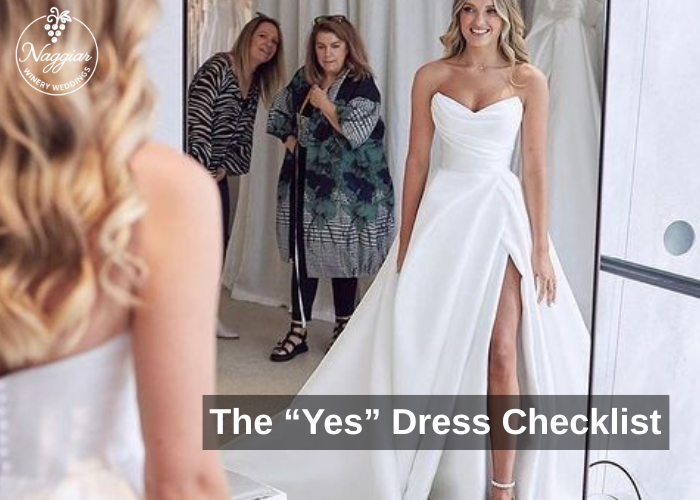
If you’re picking out a wedding dress for a Sierra Foothills celebration—think vineyard views, golden-hour photos, and maybe a little breeze—you’ll want a gown that looks amazing and behaves on real ground (grass, gravel, patios… the whole winery obstacle course). Here’s how to shop smarter, avoid common try-on traps, and end up with a dress that feels like you—not like a fancy costume you can’t sit down in.
Quick Answers (read this first)
Start shopping 8–12 months out (or sooner if you want custom); plan 2–4 months for alterations.
Pick your venue vibe early (outdoor ceremony lawn vs. indoor barrel room changes fabric + train choices).
Budget for “the full look”: gown + alterations + bustle + shoes + veil/accessories.
Choose comfort on purpose: you should be able to breathe, hug, and dance without negotiations.
Step 1: Set your dress budget (the real one)
Before you fall in love with a gown that costs the same as a small sedan, set a budget that includes the hidden-but-normal extras:
Typical add-ons to plan for
Alterations: hemming, bodice, straps (often the biggest surprise)
Bustle: essential for trains (aka “I’d like to walk after the ceremony”)
Undergarments: bra/cups, shapewear, slips
Accessories: veil, jewelry, hairpiece
Preservation/cleaning: optional, but nice if you’re sentimental (or messy—no judgment)
Winery note: If you’re getting married among estate vines and staging photos at golden hour, you may want two priorities: movement and fabric that photographs well.
Step 2: Choose the vibe (and let your venue help you)
You don’t need a “theme,” but you do need a direction. Your dress should match the energy of your day.
Ask yourself:
Is the ceremony on a lawn with open-air views?
Will you be in a barrel room or indoor space for part of the day?
Are you going classic, modern, romantic, boho, or sleek-minimal?
If you’re planning a winery wedding in or near Grass Valley/Nevada County (or coming up from Sacramento), the look often lands in a sweet spot: elevated, natural, and photo-forward.
Helpful shortcut: Browse our winery wedding inspiration in the Naggiar Winery Weddings photo gallery to see how different silhouettes look on real people in real vineyard light.
Step 3: Know your silhouettes (so consultants can actually help)
You don’t need to memorize bridal terms, but a few basics save time:
A-line: flattering, easy to move, works almost anywhere
Ballgown: dramatic, princess energy, takes space (and can be warm)
Fit-and-flare / mermaid: curves + structure, gorgeous photos, can limit big dancing
Sheath / column: sleek, light, great for modern winery vibes
Tea-length: playful, comfortable, great if you hate trains
Winery terrain tip: If you’ll be walking on grass or between outdoor photo spots, consider A-line, sheath, or fit-and-flare with a manageable train (or a very good bustle).
Step 4: Fabric matters more than you think (especially outdoors)
Here’s where your venue + season quietly run the show.
Best fabrics for a Sierra Foothills winery setting
Crepe: clean lines, modern, photographs beautifully
Chiffon: airy and floaty, great for movement and breezes
Lace overlays: romantic and textured, great in natural light
Tulle: dreamy, but can snag on rustic surfaces (proceed, don’t panic)
Be mindful with
Heavy satin or multiple thick layers if you’re marrying in warmer months
Very delicate lace if you’ll be near vines, wood, or textured walls
If your ceremony is outside and your reception is inside, aim for a fabric that transitions well—like crepe with a lace bodice, or chiffon with structured support.
Step 5: Shopping appointments—how to make them count
Bring the right people, wear the right stuff, and keep your brain from turning to mush.
Bring
1–3 trusted people (more isn’t more—more is louder)
Photos of what you like and what you don’t
Nude seamless underwear; a strapless bra if you love one
Wear/Do
Minimal makeup (unless you’re testing lip transfer—bold choice)
Hair up clip + down option to visualize necklines
Practice sitting, walking, and lifting your arms in every dress
Say out loud
Your venue type (outdoor ceremony lawn vs. indoor barrel room)
Your comfort level with trains, straps, and structure
Your budget (including alterations)
Step 6: The “Yes” test (aka: how you know it’s the one)
You don’t have to cry. You just need clarity.
A gown is a strong “yes” if:
You feel like yourself—just upgraded
You can move without constant adjusting
The neckline and waist feel secure (no “tugging” all day)
You can imagine photos you’ll love at golden hour
You’re excited to wear it again after sleeping on it (if time allows)
One more winery-specific check:
Can you comfortably walk from ceremony to photos to reception without needing a pit crew? If not, choose a simpler train, add a bustle, or consider a second look.
Step 7: Timeline for alterations (don’t leave this to fate)
A reliable timeline:
Order dress: 8–12 months out (earlier for custom)
First fitting: ~8–10 weeks before wedding
Second fitting: ~4–6 weeks before
Final fitting: 1–2 weeks before
Pro move: Bring your wedding shoes to fittings (or a pair with the exact same heel height). Hemlines do not respect guesswork.
Step 8: Dress + venue planning (Naggiar-friendly approach)
Once your dress is handled, you can plan the rest of the day around comfort and flow—especially if you’re looking at micro weddings or smaller guest counts.
Explore our winery wedding pricing to match your vision and budget.
Considering something intimate? Check out Micro Weddings at Naggiar (great for up to 75 guests Mon–Thu).
When you’re ready, reach out to talk dates, layout options, and what your day could look like on our ceremony lawn with vineyard views.
Pro Tips
Take front/side/back photos in each contender (and a quick video walking).
Choose one decision-maker (you) and one tie-breaker (trusted person).
If you love drama, get it with a detachable overskirt or statement veil—less stress later.
Practice sitting and dancing before you buy; comfort is not a “later” problem.
Common Mistakes
Trying on dresses way above budget “just for fun” (your heart disagrees).
Not factoring alterations time—or assuming rush fees are cute.
Forgetting the venue: a cathedral-length train on grass is… ambitious.
Bringing a crowd that turns the appointment into a committee meeting.
FAQs
Q: When should I start picking out a wedding dress?
A: Ideally 8–12 months before your date, especially for made-to-order gowns. Alterations commonly start 8–10 weeks out.
Q: How many people should I bring to a dress appointment?
A: 1–3 trusted people max. Too many opinions can turn “fun” into “group project.”
Q: What’s the best wedding dress style for an outdoor winery ceremony?
A: A-line, sheath, or fit-and-flare with a manageable train (and a solid bustle). Comfort + movement matter on grass and patios.
Q: Do I need a bustle?
A: If you have any train at all, yes—unless you want to carry it all night (which sounds romantic until minute 12).
Q: What should I bring to fittings?
A: Your wedding shoes (or same heel height), undergarments, and any accessories that affect neckline/fit.
