

Selecting the Bridesmaid Dress: A Stress-Less Guide for Winery Weddings
Quick Answers (read this first)
Pick a color palette + fabric, then let bridesmaids choose their own silhouette (most flattering, least drama).
Start shopping 5–7 months out (shipping + alterations are real, even when you’re manifesting otherwise).
For vineyard venues, prioritize movement-friendly fabrics and shoes that survive grass.
Set a clear budget range early, and decide who pays for what (dress, alterations, shoes).
Selecting the bridesmaid dress without accidentally starting a group chat war
If you’re planning in the Sierra Foothills (hello, views), your bridesmaid dresses have a special job: look cohesive in photos and stay comfortable from ceremony to dance floor—especially if you’re doing outdoor moments, walking paths, or sunset portraits.
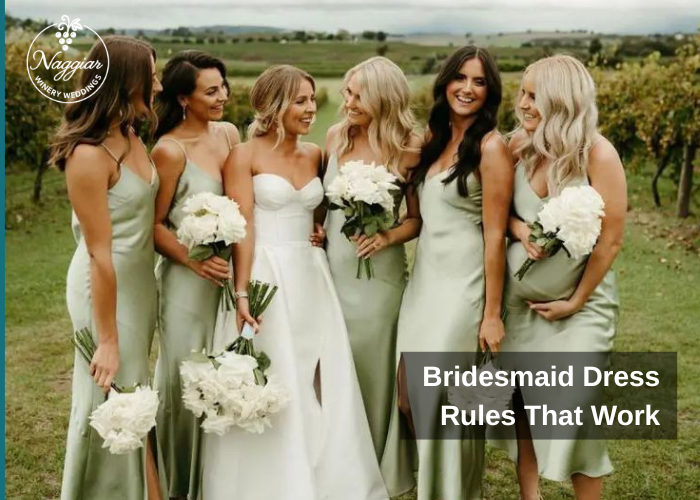
This is the sweet spot: you pick the vibe, they pick the fit. Everyone wins. No one “forgets” to RSVP to the dress decision.
Choose a dress approach (the 4 options that actually work)
1) Same color, same fabric, different styles (the crowd favorite)
You choose: color + fabric + length (and maybe neckline rules)
They choose: silhouette that fits their body and comfort level
Why it works: cohesive photos, happier humans.
2) Same dress for everyone (highest control, highest risk)
Best when your group is similar in sizing/comfort preferences—or you’ve found a unicorn dress that flatters nearly everyone.
3) Mix-and-match within a palette (effortless, editorial)
You pick 3–5 shades (ex: terracotta, clay, rust, sand).
Pro tip: Keep fabric consistent (all satin or all chiffon) to avoid looking like five separate weddings happened.
4) Patterned or printed dresses (bold, tricky)
Gorgeous when done well, but harder to coordinate and rewear. If you go here, keep bouquets and accessories simpler.
Pick winery-friendly colors (aka “will this photograph well in vines?”)
Vineyard backdrops are rich: green vines, warm wood tones, and golden light. These bridesmaid colors tend to look incredible at winery venues:
Earthy warms: terracotta, clay, cinnamon, rust
Soft neutrals: champagne, taupe, sand, latte
Moody classics: deep emerald, merlot, navy, charcoal
Modern romance: dusty rose, mauve, muted lavender
Avoid (or use carefully):
Neon/brights that fight the scenery
Super-pale shades that can read “almost white” in sun
One-off trendy colors if you want rewear value
If you want visual inspo, browse real-life wedding color stories in the photo gallery of Naggiar Vineyard & Winery using this internal link: See winery wedding photos in the gallery.
Fabrics that behave in outdoor ceremonies + golden hour
Winery weddings often mean sunshine, breezes, and walking on natural surfaces. Fabric choice matters more than people think.
Great choices:
Chiffon (lightweight, forgiving, moves beautifully)
Crepe (sleek, modern, doesn’t cling as much as satin)
Matte satin (luxurious without the “flashlight reflection” effect)
Velvet (stunning for fall/winter, but warm—plan accordingly)
Proceed with caution:
Shiny satin (can photograph very reflective)
Super-thin knits (can show every seam line and undergarment detail)
Winery note: if you’re taking photos near the barrel room or wood textures, matte fabrics tend to look especially rich and timeless.
The “everyone looks good” fit strategy
Here’s the simplest framework:
Set 1–2 non-negotiables
Examples: floor length, one color, same fabric, or “no strapless.”Give 3–6 silhouette options
A-line
Wrap
Slip
Empire waist
One-shoulder
Flutter sleeve
3. Approve colors via a swatch photo Lighting changes everything. Ask them to photograph the fabric in daylight.
4. Undergarments plan (yes, really) Tell them what’s expected: strapless bra, shapewear optional, nude underlayers, etc. This saves you from 11th-hour surprises.
Budget talk: make it clear, make it kind, make it early
A good rule: propose a range instead of a single number (ex: $120–$220). Then decide:
Who pays for the dress?
Are alterations included?
Are shoes/jewelry standardized or flexible?
A friendly script you can paste into a message:
“Goal is a cohesive look, but I want you comfortable. Budget range is $–$, and you can choose your preferred style in the same color/fabric.”
Timeline: when to order bridesmaid dresses (so nobody panic-rushes)
7–8 months out: choose palette + approach (same dress vs mix-and-match)
6–7 months out: order dresses (especially for popular brands/colors)
2–3 months out: first alterations appointment
3–4 weeks out: final fitting + steam plan
If you’re planning a smaller celebration, you might love a simpler timeline + fewer moving parts. See options here: Explore micro wedding packages here.
Shoes + accessories for vineyard settings (cute, but functional)
For outdoor lawns and paths:
Block heels, wedges, or dressy flats tend to survive best
If you love stilettos, bring heel protectors (your future self says thank you)
Accessories:
Let dresses do the talking, especially with scenic backdrops. A consistent earring tone (gold or silver) often looks more polished than forcing identical jewelry.
Dress rehearsal tip: do one full “try-on night”
Have bridesmaids try on:
Dress
Shoes
Undergarments
Jewelry (if chosen)
This is where you catch:
Sheer fabric issues
Strap/bra conflicts
Hem lengths
Color mismatch across batches
How this ties into your venue plan (photos, logistics, and flow)
If your venue has a ceremony lawn, vineyard views, and golden hour portraits, your bridesmaid dresses will appear in a lot of key moments. Planning a smooth day-of flow matters just as much as the dress choice.
Want help aligning style + timeline with your venue? Start with: View wedding pricing and inclusions
And when you’re ready to talk details: Contact the Naggiar weddings team.
Pro Tips
Order swatches and view them outside—sunlight is the ultimate truth serum.
If you’re mix-and-matching, set rules: same fabric, same length, same color family.
Ask each bridesmaid to share their dress link before purchasing (prevents “it’s basically the same” chaos).
Mistake: Waiting until 3 months out to order—shipping delays + backorders are not a vibe.
Mistake: Ignoring alterations in the budget (they’re common, even with “perfect” sizing).
Mistake: Forcing identical shoes on grass—choose a “color direction” instead (nude, tan, black).
Mistake: Picking a very trendy shade without checking if it works across multiple skin tones.
FAQs
Q: When should bridesmaids order their dresses?
A: Ideally 6–7 months before the wedding to allow for shipping, exchanges, and alterations.
Q: Should I pick one dress or let bridesmaids choose?
A: For most groups, choose one color + fabric and let bridesmaids pick their silhouette. It’s cohesive and more flattering.
Q: What’s a reasonable bridesmaid dress budget?
A: Common ranges are $120–$220, but set a range that fits your group and clarify whether alterations are included.
Q: What fabrics work best for outdoor winery weddings?
A: Chiffon, crepe, and matte satin photograph well and move comfortably outdoors. Velvet works beautifully in cooler seasons.
Q: How do I handle different body types and comfort levels?
A: Offer multiple neckline/sleeve options, allow supportive undergarments, and set only 1–2 non-negotiables.
