

Planning a Filipino Wedding: Traditions, Timeline, and Tips That Actually Help
Quick Answers (save this, thank yourself later)
Must-know traditions: pamamanhikan (optional), ninong/ninang sponsors, arras, veil & cord, unity candle, money dance.
Best planning move: decide early which traditions you’ll include so your ceremony timeline stays smooth.
Reception priority: food + flow (Filipino families will forgive many things… but not hunger).
Venue tip: choose a place that can handle both heartfelt ceremony moments and a lively dance floor.
What makes a Filipino wedding feel “Filipino” (without being a 6-hour marathon)
Planning a Filipino wedding is basically an Olympic event in love, logistics, and family group chats. You’re honoring culture, keeping elders happy, and still trying to make it feel like your day—not a committee meeting with centerpieces.
If you’re planning in the Sierra Foothills / Nevada County / Grass Valley area (with guests coming from Sacramento and beyond), you also have the fun challenge of travel timing, weather, and how many people will “just stop by for a quick hello” (spoiler: they will not).
Here are the core pieces that usually define a Filipino wedding—then we’ll get into a practical plan.
Filipino wedding traditions: what they are and how to include them smoothly
1) Pamamanhikan (optional, but meaningful)
Pamamanhikan is the traditional family meeting where the groom’s family formally asks for the bride’s hand. Some couples do a modern version: a dinner, a short speech, maybe a blessing.
Planning tip: If you’re doing it, schedule it 2–6 months before the wedding so it feels special—not squeezed into chaos week.
2) Ninong and Ninang (sponsors)
Your ninong and ninang are wedding sponsors—often respected married couples who guide and support you. This can be deeply meaningful… and also a headcount multiplier.
Planning tip: Decide early how many sponsors you want and what roles they’ll play (processional, candle, veil/cord, etc.). Then confirm their participation before you print programs.
3) Arras (wedding coins)
Arras are coins symbolizing prosperity and shared responsibility. Usually presented after the vows as a gesture of unity and commitment.
Logistics: Assign one person (often a sponsor or coordinator) to physically hold the coins and cue the handoff. Coins don’t cue themselves.
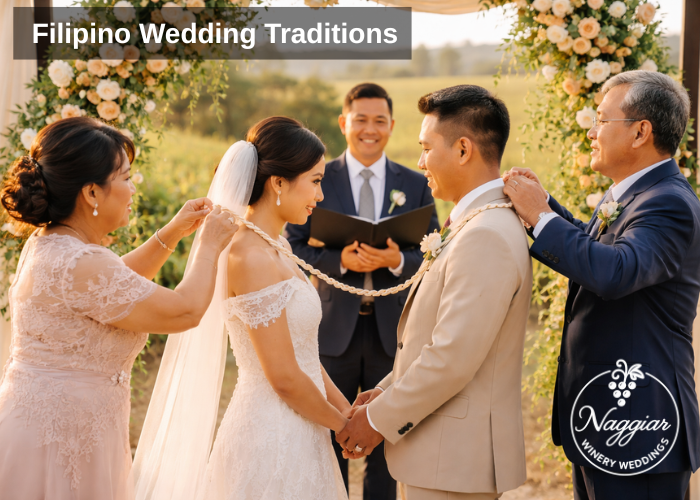
4) Veil and Cord
The veil symbolizes unity and protection; the cord (often in a figure-eight) represents an unbreakable bond.
Timing tip: These are beautiful—but they add steps. Build 5–8 minutes into your ceremony timeline so everyone’s calm and photos don’t feel rushed.
5) Unity Candle
The unity candle is commonly included, sometimes alongside veil/cord or arras.
Venue tip: If you’re outdoors (hello, golden hour), plan for wind. Consider hurricane glass, a wind guard, or a backup plan that doesn’t involve panic and a lighter.
6) Money Dance
The money dance is iconic: guests pin money to the couple while everyone celebrates. It’s fun, it’s chaotic, it’s a core memory.
Make it smooth:
Choose one song (or a short playlist) so it doesn’t run forever.
Assign a trusted friend to manage pins + collect envelopes.
Consider a dedicated moment after dinner before open dancing.
Step-by-step: planning a Filipino wedding that stays joyful (and on time)
Step 1: Pick your “non-negotiables”
Start with 3 buckets:
Traditions you must include (ex: veil & cord, arras, money dance)
Traditions you like but can modify (ex: pamamanhikan, number of sponsors)
Traditions you’re skipping (and that’s okay)
Write them down. This becomes your “family conversation anchor” when opinions start flying.
Step 2: Build a ceremony flow that honors tradition and your guests’ attention span
Here’s a sample ceremony order that works well:
Processional (include sponsors if desired)
Welcome / opening prayer
Readings or vows
Exchange of rings
Arras (coins)
Veil and Cord
Unity Candle
Pronouncement + kiss
Recessional
Pro tip: Ask your officiant to run a quick rehearsal of the “handoff moments” (coins, veil, cord). Filipino ceremonies are beautiful—when everyone knows where to stand.
Step 3: Plan reception flow around food (yes, really)
If you want a happy Filipino reception, don’t treat dinner like an afterthought. A great flow looks like:
Cocktail hour (photos + mingling)
Grand entrance
Quick welcome/toast
Dinner service
Speeches (keep them short and heartfelt)
Money dance
Open dancing
If you’re considering a winery setting near Grass Valley, a venue that supports smooth catering flow and a comfortable dinner setup is a big win for multi-generational guests.
If you’re exploring winery-wedding options, start with clear package details so you can plan confidently (and stop doom-scrolling). See wedding package details and pricing here.
Step 4: Choose the right guest experience for your reality
Filipino weddings can be big—or intentionally intimate. If you’re aiming for something smaller (while still meaningful), consider a scaled-down plan with your must-have traditions and a strong meal + celebration.
If that sounds like you, check out micro wedding options for smaller guest lists.
Step 5: Make a photo plan that captures tradition
Tell your photographer about:
Arras close-ups
Veil & cord placement
Sponsor involvement
Money dance moments
Family groupings (and yes, it’ll be a lot)
Want inspiration for how these traditions look in a vineyard/winery setting? Browse the winery wedding photo gallery.
Step 6: Lock in your timeline with travel in mind
For Sierra Foothills weddings, guests may be driving from Sacramento or the Bay Area. Build buffer time:
Earlier ceremony start if you have lots of family photos
Extra time for parking/shuttles
A clear end time (so vendors and guests aren’t guessing)
When you’re ready to talk dates, guest count, and what traditions you want included, reach out through the wedding inquiry contact page.
Sample wedding-day timeline (tradition-friendly)
2:00 PM Getting ready photos begin
3:30 PM First look / couple portraits
4:30 PM Ceremony
5:15 PM Family photos (build extra time)
5:45 PM Cocktail hour
6:45 PM Grand entrance + welcome
7:00 PM Dinner
7:45 PM Toasts
8:15 PM Money dance
8:45 PM Open dancing
10:00 PM Last call / send-off
Adjust based on season—Sierra Foothills light changes fast, and golden hour waits for no one.
Pro Tips
Assign a “traditions captain” (friend/coordinator) for coins/veil/cord cues so you’re not managing props in formalwear.
Keep sponsors involved—but don’t overload the ceremony with too many moving parts.
Communicate your tradition choices early so relatives aren’t surprised on wedding week.
Common Mistakes
Leaving money dance logistics to chance. Pick a song length and designate who collects pins/envelopes.
Underestimating family photo time. Filipino weddings = big families = more group combos. Add buffer.
Planning a long ceremony and long speeches and late dinner. Hungry guests get… creative.
FAQs
Q1: What are the most common Filipino wedding traditions to include?
Arras (coins), veil and cord, unity candle, sponsors (ninong/ninang), and the money dance are among the most common.
Q2: Do we have to do pamamanhikan?
No. Some couples do a modern, simplified version; others skip it entirely. Choose what feels meaningful for your families and your relationship.
Q3: How long is a typical Filipino wedding ceremony?
With traditions like arras + veil/cord + unity candle, plan 30–45 minutes. Add buffer if you have many sponsors or readings.
Q4: When should we do the money dance?
A smooth spot is after dinner and toasts, before open dancing—guests are energized and not distracted by the dance floor yet.
Q5: How do we keep a tradition-rich ceremony from feeling chaotic?
Assign clear roles (who holds coins, who places the veil/cord), rehearse the handoffs, and build 5–10 extra minutes into the ceremony timeline.
