

How to Plan an Off-Season Winery Wedding in Nevada County
Quick Answers
Best off-season months (Sierra Foothills): Typically late fall through early spring for more venue availability and potentially better rates.
Biggest must-do: Lock in a weather-proof Plan B that still feels like you, not “we panicked.”
Budget boost: Off-season can mean better vendor availability, more flexible timelines, and fewer “peak date” premiums.
Guest comfort: Prioritize warmth, lighting, and logistics (hello, earlier sunsets).
Why an off-season winery wedding is secretly elite
Planning an off-season wedding is like ordering the chef’s special—less chaos, more attention, and you feel smug in a good way.
In Nevada County wine country (think Grass Valley, the Sierra Foothills, and an easy drive from Sacramento), off-season weddings can bring:
More date options (including those dreamy Thursdays)
Better vendor availability (your first-choice team might actually be free)
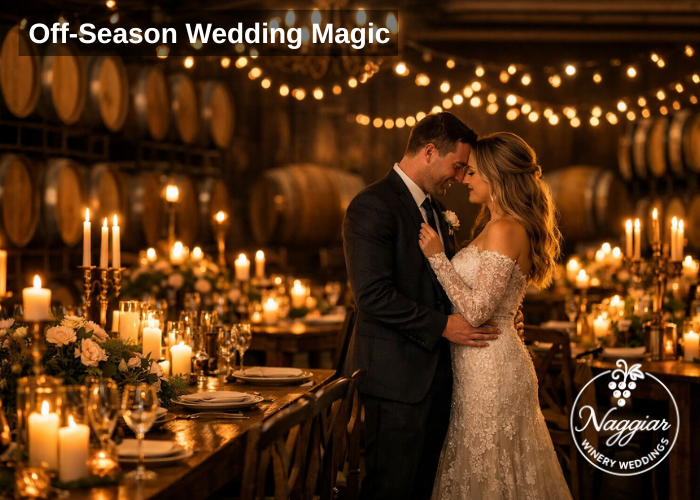
Cozy, romantic atmosphere (barrel room glow > July glare)
Smoother guest experience (less traffic, fewer competing events)
If you’re already picturing candlelight, moody vines, and a warm reception vibe—welcome, you’re among friends.
Step 1: Pick your “off-season” definition (and the vibe)
Off-season isn’t one single thing. It’s a spectrum:
Late fall: golden tones, harvest energy fading, still pleasant temps
Winter: cozy elegance, candlelight, deeper reds, indoor-forward plans
Early spring: fresh greens, wildflowers starting, unpredictable showers
Vibe shortcut:
Want candlelit + intimate? Lean winter.
Want lush + fresh? Lean early spring.
Want warm but calmer? Late fall is your sweet spot.
If you’re considering a smaller guest count, take a look at micro celebrations built for intimate winery vibes via our Micro Weddings packages.
Step 2: Build a weather-first plan (that still feels like the main plan)
Off-season weddings win when the backup plan is beautiful.
Your Plan A / Plan B checklist
Ceremony: outdoor option + covered/indoor option
Cocktail hour: warm, sheltered space (barrel room energy is undefeated)
Photos: 2–3 photo locations that work in drizzle/wind
Guest comfort: heaters, wraps, hot beverages, clear signage
Timeline: earlier start to chase daylight (winter sunsets don’t negotiate)
Pro move: create a “Rain Romantic” mood board. If it rains, you don’t pivot—you execute.
Want inspiration for what that looks like in real life? Browse the winery wedding photo gallery for off-season lighting, indoor receptions, and cozy setups.
Step 3: Book vendors who love off-season logistics
Some vendors thrive in off-season because they can:
spend more time on design details
be more flexible with schedules
offer packages that are harder to access in peak months
Vendor priorities for off-season
Planner/coordinator: to manage weather pivots smoothly
Caterer: comfort-forward menus + hot beverage options
Florist: seasonal blooms + greenery (off-season doesn’t mean “sad”)
Photographer: someone skilled in low light and indoor portraits
If you’re comparing options and want straightforward numbers, head to wedding pricing and packages to see what’s possible.
Step 4: Nail the timeline (because daylight is shorter and dinner is earlier)
Off-season weddings often feel more relaxed—if the timeline is built for the season.
Sample off-season timeline (works great for shorter daylight)
2:00 PM — Getting ready photos
3:30 PM — First look + couple portraits
4:30 PM — Ceremony
5:00 PM — Cocktail hour (indoors or covered)
6:00 PM — Reception begins
8:00 PM — Cake/dessert + dancing
9:30 PM — Sparkler-free exit (because wind exists)
Yes, you can still get golden-hour vibes off-season—sometimes it’s just “golden 12 minutes.” That’s enough.
Step 5: Lean into seasonal design (instead of fighting it)
Off-season design looks intentional when you embrace the season.
Off-season winery wedding design ideas
Lighting: candles, bistro lights, uplighting, lanterns
Textures: velvet ribbons, wool throws, wood accents, matte metals
Palette: evergreen + ivory, burgundy + blush, terracotta + cream
Florals: greenery-forward arrangements, berries, dried accents, seasonal blooms
Food & drink: mulled wine, hot cocoa bar, soups, short ribs, pasta stations
If you want your day to feel intimate and elevated without needing 10,000 peonies, off-season is your moment.
Step 6: Communicate clearly with guests (so they dress right and arrive on time)
Guests do great when expectations are crystal clear.
Include these in your wedding website/invite inserts:
Attire guidance: “outdoor ceremony, bring a wrap/jacket”
Footwear note: vineyard terrain can be uneven (thin heels may suffer)
Sunset timing: encourage on-time arrival
Weather note: “rain plan is just as gorgeous” (confidence is contagious)
Pro tips
Treat the rain plan like the main plan (design it, light it, love it).
Add a hot beverage moment (it’s practical and adorable).
Use lighting as décor: candles + warm uplighting = instant romance.
Start earlier than you think you need to—off-season photos go fast.
Consider a smaller guest count and upgrade the experience (food, wine, lounge areas).
Common mistakes
Assuming guests will “figure out” the weather (they won’t).
Booking a photographer who struggles with low light.
Skipping heaters/comfort items to “save money” (guests remember being cold).
Planning an outdoor-heavy flow without a covered transition space.
Not communicating footwear/terrain notes (vineyard gravel is undefeated).
FAQs
Q1: What is considered an off-season wedding in wine country?
A: Generally, dates outside peak summer and early fall—often late fall through early spring—when venues and vendors may have more availability.
Q2: Are off-season weddings cheaper?
A: Often they can be, especially for venues and certain vendors, because peak-demand dates may carry premiums. The biggest “savings” is usually flexibility and availability.
Q3: How do I plan for weather without stressing out?
A: Choose a venue with a beautiful indoor/covered option, build a weather-friendly timeline, and design your Plan B so it feels intentional.
Q4: What time should an off-season ceremony start?
A: Earlier than a summer wedding. Aim to align with available daylight for photos and guest comfort—your venue and photographer can help you dial it in.
Q5: What are the best off-season design elements for a winery?
A: Warm lighting, cozy textures, seasonal greenery, and comfort-forward food/drink (think candlelight, lounge areas, and hot beverages).
